
A building automation system (BAS) is a centralized network of sensors, controllers, and software. It automatically monitors and adjusts a commercial building’s HVAC equipment, rather than relying on manual thermostat adjustments.
For facility managers, that means heating and cooling that responds to real occupancy and outdoor conditions in real time. It’s not a fixed schedule that wastes energy when a building is half-empty, or the weather shifts overnight.
Key Takeaways
- A BAS connects sensors, controllers, and HVAC equipment into one system that adjusts automatically
- Demand response scheduling is one of the most common ways a BAS cuts HVAC energy use
- BAS integrates directly with VAV, VRF, and rooftop equipment already common in commercial buildings
- Centralized monitoring catches equipment problems before they become expensive breakdowns
- A properly tuned BAS pays for itself through lower utility bills and fewer emergency service calls
What Is a Building Automation System?
A BAS is built around three layers. First, field devices—the sensors and actuators that gather data and physically move dampers, valves, and fans. Second, controllers—the “brains” that read that sensor data and issue commands. Third, a central monitoring interface, where a technician or building manager can see what every system is doing at a glance.
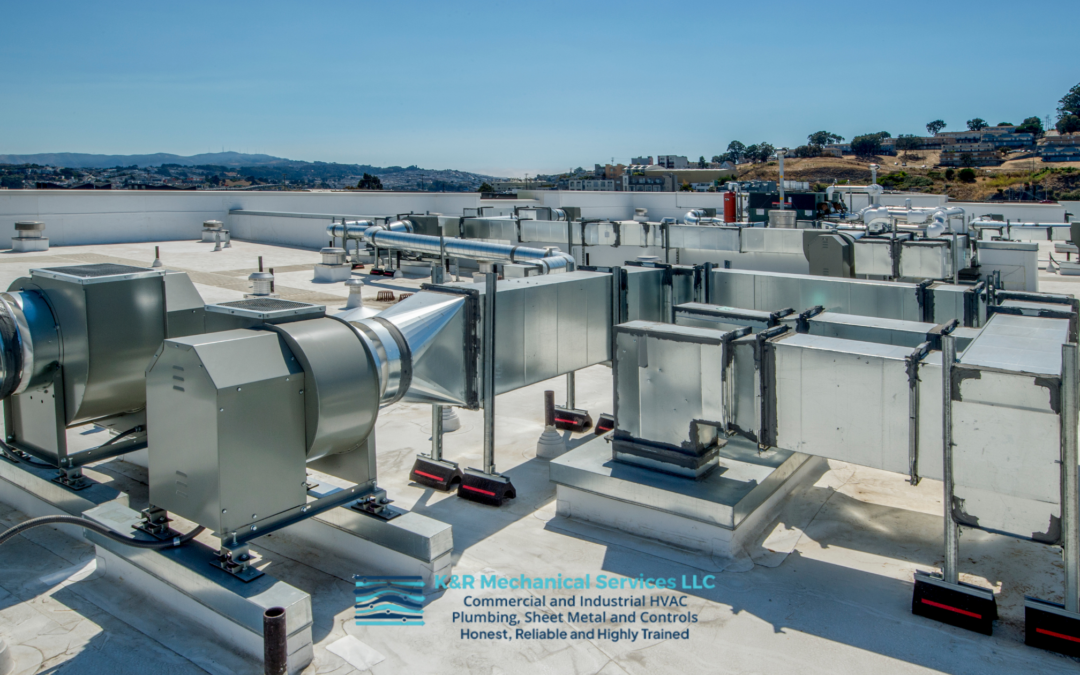
In a modern commercial HVAC setup, the BAS ties into rooftop units, chillers, boilers, and zone controls. That connection turns a collection of separate machines into one coordinated system. So instead of each unit running on its own fixed logic, the building responds as a whole.
The practical result: a BAS can shut down a heater the moment a room hits its target temperature. It can also ease off cooling in a conference room nobody’s used in two hours. Those decisions happen in seconds. A manual system depends on someone remembering to check a thermostat, which rarely happens consistently across a large building.
How BAS Optimizes HVAC Performance
Three mechanisms do most of the work.
Demand response scheduling shifts cooling and heating to run at the most efficient time of day. This reduces strain during peak utility demand periods and lowers the risk of overloading circuits. It also tends to lower the utility rate a business pays during those peak windows.
Occupancy-based adjustment uses sensors to detect whether a space is actually in use. The system scales HVAC output up or down accordingly, rather than conditioning empty rooms at full capacity around the clock.
Environmental monitoring tracks outdoor humidity, temperature, and even wind. That data lets the system anticipate load changes before they occur, rather than reacting only after the building is already too warm or too cold.
None of this requires new HVAC equipment on its own. What it requires is equipment that’s connected, plus a controls strategy tuned to how the building actually gets used day to day.
Core Components of a Commercial BAS
A functioning BAS typically includes four pieces working together:
- Direct digital controllers (DDC) that translate sensor input into equipment commands
- Temperature, humidity, and CO2 sensors placed throughout occupied zones
- A central monitoring dashboard where facility staff can view system status and override settings when needed
- Network connectivity — often Wi-Fi or a dedicated building network — linking every controller back to the central system
Each piece matters on its own, but the value comes from how they work together. A sensor without a controller just collects data nobody acts on. A controller without a dashboard leaves facility staff guessing why a zone is misbehaving.
Common BAS Use Cases in Commercial Buildings
A BAS doesn’t replace the mechanical equipment doing the actual heating and cooling. Instead, it coordinates that equipment. Two of the most common pairings show how this works in practice.
Buildings running VAV systems use a BAS to manage the dampers and fans that control airflow to each zone. That means different areas can run at different temperatures, without separate manual controls for every single room.
Buildings running VRF systems lean on the BAS even more heavily. VRF setups are built around centralized control of many individual indoor units from one interface. That’s exactly the kind of coordination a BAS is designed to handle, which is why the two technologies tend to get installed together on larger commercial projects.
Signs Your Building Could Benefit from a BAS Upgrade
A few patterns tend to show up in buildings that are overdue for BAS work:
- Some zones run consistently too hot or too cold no matter how the thermostat is set
- Facility staff manually adjust schedules for weekends, holidays, or after-hours use
- Energy bills spike without a clear cause tied to weather or occupancy
- Nobody has full visibility into which units are running, idle, or in fault
- The building still relies on individual thermostats instead of a central system
Any one of these on its own is manageable with routine maintenance. But several showing up together usually means the controls layer hasn’t kept pace with the mechanical equipment already in the building.
What a BAS Upgrade Typically Involves
A BAS upgrade doesn’t usually mean ripping out existing equipment. Instead, it starts with an assessment of what’s already installed and where the gaps are.
First, a technician walks the building and audits current controls. This step identifies which zones already have sensors, which run on standalone thermostats, and where wiring or network access needs work.
Next comes a controls plan. This maps out which equipment gets tied into the BAS first, since most buildings phase the work rather than converting everything at once. High-priority zones — server rooms, large open floors, areas with the biggest temperature complaints — usually go first.
Finally, installation and calibration happen zone by zone. Each sensor and controller gets tested against real conditions, not just wired in and left alone. A BAS that isn’t calibrated to the building’s actual patterns won’t deliver the savings it’s capable of.
Because this work happens in phases, a building can keep operating normally throughout. There’s no need to shut down HVAC service for the length of the project.
Choosing a BAS Integration Partner
A BAS integration touches nearly every piece of mechanical equipment in a building. Because of that, the contractor doing the work needs to understand both the controls side and the HVAC side — not just one or the other.
KR Mechanical Services designs and installs HVAC building automation systems for commercial properties across the Houston metro. That work is paired with HVAC controls tuned to each building’s actual equipment and usage patterns, rather than a generic setup applied the same way everywhere.
Getting the controls layer right matters for the budget, too. The U.S. Department of Energy puts heating and cooling at around 35% of all U.S. building energy consumption — the single largest share of any end use. That’s exactly the load a well-tuned BAS is built to manage down, which is why the controls strategy often matters as much as the equipment itself.
Get a BAS Assessment for Your Building
If your building’s HVAC still runs on manual schedules and individual thermostats, a BAS assessment can show where automation would cut the most cost. The assessment itself is straightforward: a technician reviews your current equipment, flags the zones with the biggest savings potential, and lays out a phased plan you can act on at your own pace. Contact KR Mechanical Services to have a technician walk your building’s systems.
The KR Mechanical Team is the commercial mechanical, plumbing, and refrigeration crew behind KR Mechanical Services in Houston, TX—a licensed contractor (NAICS 238220) serving facility managers, property owners, and commercial operators across the Houston metro.
Ready to talk to a licensed Houston commercial contractor?
If your building’s needs more than a one-time fix, KR Mechanical Services can help. We’re a licensed commercial mechanical contractor (NAICS 238220) serving facility managers and property owners across the Houston metro. Contact KR Mechanical Services to schedule an assessment, or call (281) 408-9414.