
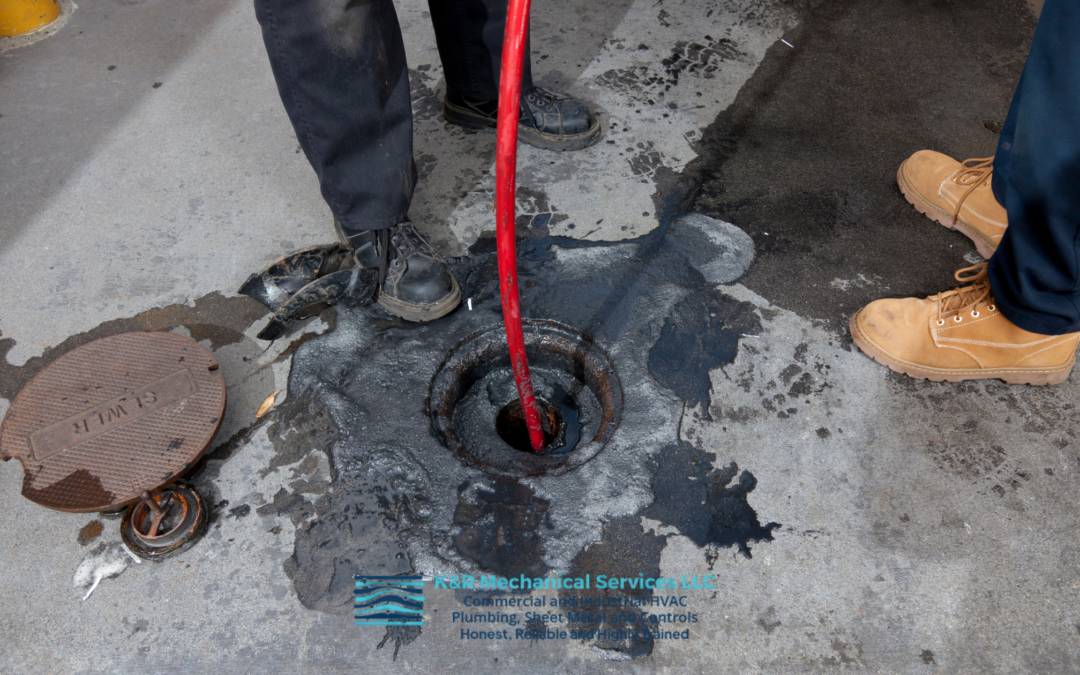
Commercial hydro jetting is a drain-cleaning method that uses a high-pressure stream of water—typically 2,000 to 4,000 PSI—to scour the inside of a pipe clean, removing grease, scale, sludge, and root intrusion instead of just punching a hole through the blockage the way a drain snake does.
For facility managers responsible for large or high-traffic buildings, it’s one of the most effective tools for preventing the recurring backups, slow drains, and emergency calls that come with heavy daily plumbing use.
Key Takeaways
- Hydro jetting clears the full diameter of a pipe, not just a channel through the clog
- It’s especially effective on grease buildup, mineral scale, and root intrusion in commercial lines
- Regular jetting on a schedule prevents the emergency backups that shut down kitchens, restrooms, or production floors
- It’s safe for most commercial pipe materials when performed by a licensed plumber who knows the building’s system
- Facility managers typically pair it with camera inspection to confirm results and catch developing issues early
How Hydro Jetting Works
A hydro jetting unit pushes water through a specialized nozzle at high pressure and volume. The nozzle is fed into the pipe through an access point—a cleanout, drain, or grease trap—and pulled back slowly while the water blasts outward and backward, cutting through buildup on the pipe walls as it goes.
The difference between this and a standard drain snake is scale. A snake breaks or drags through the center of a clog to restore flow. Hydro jetting scrubs the entire interior surface of the pipe, which is why it’s the preferred method for commercial systems where grease, sediment, and scale accumulate continuously rather than showing up as a single obstruction.
Why Commercial Buildings Need It More Than Residential Ones
Commercial plumbing systems carry a volume and type of waste that residential lines rarely see: kitchen grease from restaurants, sediment from industrial processes, higher-frequency restroom use in office towers and retail centers, and longer horizontal pipe runs that give debris more places to settle.
That’s part of why hydro jetting shows up so often in:
- Restaurant and food-service kitchens, where grease coats pipe walls faster than most operators expect
- High-rise buildings, where long vertical and horizontal runs are harder to access and more disruptive to shut down for repairs
- Grease trap–regulated properties, where cities and states require documented maintenance to stay in compliance
- Industrial and distribution facilities, where process water can carry sediment that settles in low-flow sections of pipe
Signs a Facility Needs Hydro Jetting
A few patterns tend to show up before a full backup does:
- Slow drains that come back within days of a standard snaking
- Gurgling sounds from floor drains or fixtures
- Recurring backups in the same line, even after “clearing” it
- Sewage odor near floor drains or grease traps
- Multiple fixtures backing up at once, which usually points to a shared main line problem rather than one isolated drain
If any of these are showing up on a repeat basis, that’s usually a sign the pipe has ongoing buildup that a snake is only temporarily punching through—not actually removing.
What to Expect During a Commercial Hydro Jetting Service
A typical service starts with a camera inspection to confirm the pipe’s condition, material, and the location of the blockage or buildup before any pressure is applied—this matters because older or damaged pipe can need a gentler approach. From there, the technician accesses the line through the nearest cleanout, works the jetting hose through the full run, and finishes with a second camera pass to confirm the line is clear.
For facilities on a maintenance contract, this is usually scheduled during off-hours to avoid disrupting kitchen service, tenant operations, or building traffic.
How Often Commercial Properties Need It
There’s no single universal interval—it depends on what’s running through the pipes. Restaurant grease lines often need jetting on a recurring schedule (commonly quarterly), while general building lines with lower grease or sediment load can go longer between services. The right interval is best set with a plumber who’s inspected the specific system, rather than a generic rule of thumb.
Choosing a Commercial Hydro Jetting Provider
Not every plumber who does residential drain cleaning is equipped for commercial hydro jetting. Look for:
- A licensed commercial plumbing contractor, not just a residential service
- Experience with the type of facility you manage—restaurant grease lines, high-rise stacks, and industrial process lines all behave differently
- Camera inspection included as standard practice, not an upsell
- Familiarity with local grease trap and backflow compliance requirements
KR Mechanical Services is a licensed commercial plumbing contractor serving the Houston metro, and every hydro jetting job includes camera line inspection so you know exactly what’s happening inside your pipes before and after.
Frequently Asked Questions
Is hydro jetting safe for older commercial pipes?
In most cases, yes—but it depends on the pipe’s material and condition. Cast iron, PVC, and most modern commercial piping handle hydro jetting well. Older, corroded, or already-cracked pipe can need a lower-pressure approach or repair first. This is exactly why a camera inspection happens before jetting begins—it confirms what the line can safely handle.
How is hydro jetting different from a standard drain snake?
A drain snake breaks through or drags past a clog to reopen a channel down the center of the pipe. Hydro jetting scours the entire interior wall of the pipe. For a one-time isolated clog, a snake may be enough. For recurring buildup—grease, scale, sediment—jetting removes the material a snake leaves behind on the pipe walls, which is why the same line keeps clogging.
Can hydro jetting be done without shutting down the building or kitchen?
Usually, yes. Most commercial hydro jetting is scheduled during off-hours or slower periods specifically to avoid disrupting operations. The main line typically needs to be out of use for the duration of the service, but a scheduled visit can be timed around your business hours rather than forcing an unplanned closure.
How much does commercial hydro jetting cost?
Cost depends on pipe length, access difficulty, the severity of buildup, and whether camera inspection is included. Because every building’s system is different, an accurate number comes from an on-site or camera-based assessment rather than a flat estimate—a contractor quoting a price without seeing the line first is skipping a step that matters.
Does hydro jetting help with grease trap compliance?
It can be part of a compliance strategy. Regular hydro jetting of grease lines reduces buildup between grease trap pump-outs and helps prevent the backups that trigger compliance issues with local sewer authorities, which state environmental agencies require documented maintenance to avoid.
Get a Commercial Hydro Jetting Assessment
If your facility is dealing with recurring drain issues, grease buildup, or you’re just due for preventive maintenance, our commercial hydro jetting team can assess your system and recommend a schedule that fits how your building actually operates. Contact KR Mechanical Services to schedule an inspection.
The KR Mechanical Team is the commercial mechanical, plumbing, and refrigeration crew behind KR Mechanical Services in Houston, TX—a licensed contractor (NAICS 238220) serving facility managers, property owners, and commercial operators across the Houston metro.
Ready to talk to a licensed Houston commercial contractor?
If your building’s needs more than a one-time fix, KR Mechanical Services can help. We’re a licensed commercial mechanical contractor (NAICS 238220) serving facility managers and property owners across the Houston metro. Contact KR Mechanical Services to schedule an assessment, or call (281) 408-9414.